


Bowling Ball - REAL MONEY GAME
4.519.00 Reviews
App Specs
- Version
- 1.0.1
- Updated On
- License
- Free
- Downloads
- 10,000+
- Developer
- LongHuaGame
- Categories
- Sports
- Platform
- Android
Screenshots
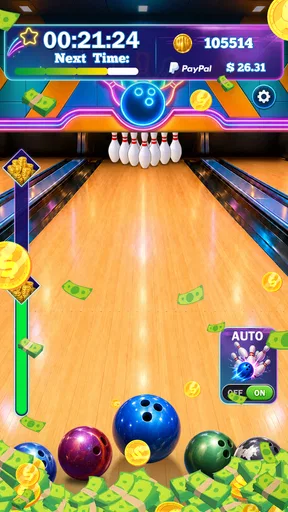
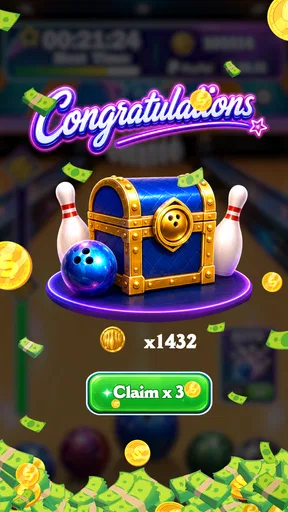
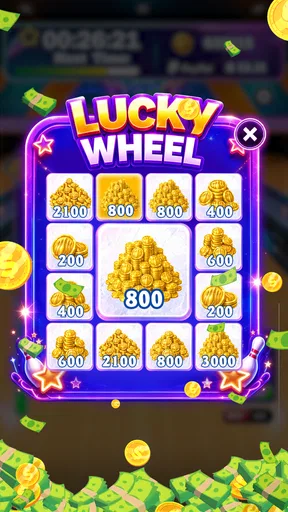
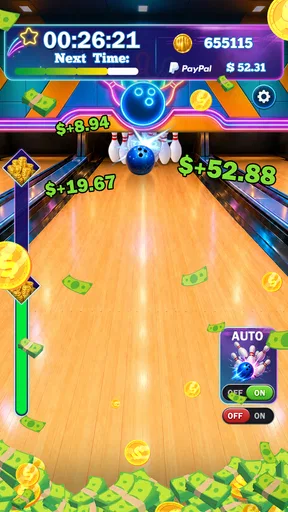
 Analysis by AppCompare
Bowling Ball - REAL MONEY GAME is a sports game built around a simple promise: roll the ball, knock down pins, and cash out real money. I approached it as a first-time player rather than expecting a full bowling simulator, and that distinction matters. The appeal is immediate because the basic action is familiar, but the real-money angle makes every tap feel more consequential than a casual lane game.
The game is free to download and comes from LongHuaGame. It sits in the sports category, carries a Mature 17+ age rating, and is available for devices running Android 8.0 or later. Its current version is 1.0.1, while its release date is July 28, 2026. Those details make it easy to identify in the app store, but they do not tell you how it feels to play, so I focused on the practical questions a new player is likely to have: what happens after installation, how to make the first useful move, and where the money-focused design can create confusion.
What the first few minutes feel like
The opening experience is best understood as a short loop rather than a traditional bowling session. You are not downloading this for a detailed career mode, a deep roster of bowlers, or a long list of tournament rules. The central task is to control a bowling ball and try to clear the pins. That narrow focus is also its strength: I could understand the basic objective almost immediately.
For a first-time user, the important mental adjustment is to separate playing the bowling action from handling the cash-out side. The first is familiar and visual. The second deserves more attention because real-money wording can encourage people to move too quickly. I would treat the initial session as a learning run, not as a reason to make a financial decision.
The game’s 4.4 average from around eighty ratings suggests that early players have generally responded positively, although that figure is not a substitute for checking whether the experience suits you. With around ten thousand installs, it is still a relatively small title compared with established sports games. That smaller scale can make the experience feel more focused, but it also means I would approach it with realistic expectations rather than comparing it directly with a major console-style bowling production.
One useful way to begin is to watch the complete path of a ball before trying to optimize anything. Notice where the ball starts, how much control the game gives you, and what appears after the pins fall. This helps you distinguish the actual bowling interaction from the account, reward, or cash-out prompts surrounding it. If you rush through those screens, you may remember the promise of earning money while overlooking the conditions attached to using that part of the game.
Who will probably enjoy it
I can see the strongest fit for adults who want a quick sports-themed distraction with a clear objective. It may work well during a short break, especially for someone who likes the tension of a single attempt and does not want to learn a complicated control system. The bowling theme also makes the game approachable for people who have never played a competitive mobile sports title.
Worth Reading Before You Choose

Flipboard Shows What News Apps Must Do Beyond the Feed

Switching to Android Auto Means Rethinking Your Driving Routine

Google Calendar Makes a Crowded Week Easier to Manage

Ludo King Makes the Most of the Minutes Between Plans

Baby Panda World Brings Quick Play to Modern Phones, but Its Game Library Feels Busy

ESPN’s Live Game View Makes Following Close Games Easier
It is less suitable for anyone looking for a realistic bowling simulator. If your priority is detailed lane physics, custom equipment, multiplayer leagues, or a long progression system, this is not where I would start. A conventional bowling game is likely a better choice when the goal is practice, competition, or recreation without the added focus on cashing out.
I would also skip it if the real-money framing makes you uncomfortable. Even when the underlying action is simple, the possibility of financial rewards changes how the game feels. A player who prefers completely consequence-free play may enjoy an ordinary bowling app more because it keeps attention on the sport instead of the payout path.
Getting through setup without rushing
Installation itself should be approached like any other game, but the first launch deserves a slower read. I recommend checking the age rating before handing the device to a younger player: this title is marked Mature 17+, so it is not a game I would casually place on a child’s phone just because bowling is a familiar sport.
Once the game opens, look for the distinction between starting a bowling attempt and entering any money-related area. A first-time player should identify the ordinary play control before exploring cash-out options. That order reduces confusion and gives you a baseline for judging whether the game is enjoyable even without focusing on rewards.
Because the game is free, the download does not require an upfront purchase. I still would not interpret “free” as meaning that every part of the experience is financially irrelevant. The store summary specifically connects knocking down pins with cashing out real money, so I would read each money-related instruction carefully and avoid assuming that a successful roll automatically means an immediate payment.
This is one of the most important practical tips I can offer: learn the play loop before you think about the payout loop. First confirm how a shot is started, how the ball is aimed or released, and how the result is shown. Then inspect the cash-out process with the same care you would use for any financial feature. That two-stage approach is much less stressful than trying to understand everything during the first roll.
The developer is LongHuaGame, and the installed version is 1.0.1. If the app offers an update later, I would keep the version current before judging a problem as a permanent flaw. Early releases can change their menus or smooth out rough edges, and checking the version helps you know whether you are evaluating the same build as other players.
A sensible first-session routine
My recommended first session is deliberately modest. Open the game, identify the main bowling action, complete a few attempts without making a cash-out decision, and then return to the surrounding menus. Pay attention to whether the game clearly separates your score, any reward balance, and the action required to withdraw money. If those elements are easy to tell apart, the experience feels more manageable.
Do not treat a lucky early result as proof that you have mastered the game. Bowling has an obvious visual reward when pins fall, and that can create an urge to repeat the action immediately. I found it more useful to ask what I actually controlled on the previous attempt. Was it the starting position, the direction, the timing, or simply a tap to launch? Knowing that answer is more valuable than celebrating one good-looking result.
Another practical habit is to stop after the first meaningful session and decide whether you enjoy the bowling itself. If the only appealing part is the possibility of money, the game may not hold your attention for long. If the ball-and-pins interaction is satisfying on its own, the reward layer becomes an optional reason to continue rather than the only reason to open the app.
Making the first successful move
The first meaningful success is not necessarily a cash-out. For me, it is completing a shot while understanding why the result happened. That could mean knocking down a useful number of pins, finding a comfortable release direction, or simply learning how the game responds to your input. This definition keeps the opening experience reassuring and prevents a new player from measuring everything against money immediately.
Start with a controlled attempt instead of trying to produce a perfect strike. Use the first roll to learn the relationship between your finger movement and the ball’s path. If the game presents an aiming line or another visual guide, use it as a reference rather than assuming it guarantees the outcome. If the interface is more minimal, make one small adjustment at a time so you can tell which change helped.
A non-obvious advantage of this method is that it creates a personal baseline. After several attempts, you can tell whether a miss came from poor alignment or from inconsistent timing. Without that baseline, it is easy to blame the game for every result or, in the opposite direction, to assume every success came from skill. The distinction matters more in a game that connects performance with real-money language.
When you finally knock down the pins successfully, pause long enough to inspect the result screen. Look for the difference between the bowling outcome and any balance or reward information. A strong result should teach you something about the shot, not merely encourage you to press the next button. This small pause is especially useful for first-time users because it prevents accidental navigation into a different part of the app.
How to build a repeatable approach
I would use a three-attempt learning cycle. On the first attempt, keep your input simple. On the second, change only the direction or position that seemed most responsible for the miss. On the third, repeat the better approach rather than adding another variable. This is more effective than making a completely different gesture every time.
The trade-off is speed. A player who wants instant action may find this method overly careful, while a player who wants to understand the game will appreciate the control it provides. Since the title is centered on a compact bowling action, small differences in how you approach each roll can become more noticeable than they would in a larger sports game with many systems competing for attention.
I also recommend keeping your first successful result emotionally separate from the cash-out decision. A good roll can feel like progress, but it does not automatically answer practical questions about eligibility, thresholds, processing, or the steps required to receive money. The game’s central promise makes those questions important, and the safest habit is to read the relevant instructions directly inside the app before committing to anything.
For an everyday scenario, imagine opening the game during a ten-minute commute break. You have enough time for a few rolls, but not enough time to study every menu. In that situation, I would play only the basic bowling round, note how the controls respond, and leave the money-related screens for a moment when I can read them without distraction. That workflow keeps a short break enjoyable and reduces the chance of tapping through an important instruction.
Where new players may get confused
The biggest source of confusion is the phrase “cash out real money.” It can sound like a direct, guaranteed exchange between a successful roll and a payment. I would not approach it that way. In practice, a real-money feature needs careful attention to the game’s own instructions, and a player should understand the complete route from in-game result to withdrawal before treating the balance as spendable money.
That does not make the feature useless, but it changes how I evaluate it. I look for clear separation between points, rewards, balances, and withdrawal actions. If a screen uses similar wording for different things, slow down and read it again. This is a concrete place where a conventional bowling game has an advantage: it usually avoids the need to interpret a financial process at all.
Another likely confusion is the difference between a visual win and a meaningful account result. Knocking down pins is immediately visible, while the effect on a reward balance may be shown elsewhere. I would always verify the result after a successful shot instead of assuming that the animation tells the whole story.
Players may also wonder whether the game is suitable for children because the sport itself is family-friendly. The answer should follow the listed rating, not the theme. With a Mature 17+ rating and a real-money focus, I would keep it for adults and avoid presenting it as a children’s bowling toy.
Device compatibility is another simple checkpoint. The game requires Android 8.0 or later, so anyone using an older Android phone should check that before spending time troubleshooting installation. For supported devices, I would still make sure the phone has a stable connection during any account or cash-out activity, because interruptions are more frustrating when the screen is handling a balance or transaction-related step.
Limitations I noticed in the concept
The focused design can become repetitive. A player who enjoys a quick roll may see that as a benefit, but someone expecting a full sports package could run out of novelty. The store short description is simply “Bowling Ball,” and that concise identity matches the narrow experience: the game is about the ball, the pins, and the reward idea rather than a broad bowling world.
I also think the financial angle can overshadow the sport. When I play a normal bowling game, a poor roll is just a poor roll. Here, the promise of real money can make the same miss feel more important, even if the underlying control is casual. That emotional pressure is a genuine trade-off, especially for players who are prone to chasing a better result after an unsuccessful attempt.
The smaller install base is worth keeping in mind as well. Around ten thousand installs is enough to show that people are trying it, but it is not the same community size as a long-established sports franchise. If you need a large competitive scene, extensive community guides, or a proven long-term ecosystem, a mainstream bowling alternative may serve you better.
Finally, the free entry point can make the game easy to try but also easy to open impulsively. I would set a simple personal boundary before playing: decide how much time you are willing to spend, and do not confuse repeated attempts with guaranteed improvement. That rule is useful in any reward-focused game, but it is particularly important here because the title explicitly links play with cashing out.
Choosing the right next step
After the first successful bowling action, I would take one of two paths. If you enjoyed learning the shot and the money-related screens are clear, continue with short sessions and keep your expectations measured. Focus on improving consistency rather than chasing an immediate payout. The best sign that the game is right for you is that the bowling remains enjoyable even when a roll does not go your way.
If you found yourself skipping the gameplay to reach the cash-out area, I would stop and reconsider. That reaction suggests the reward promise is doing all the work, while the actual sports game is not holding your interest. In that case, a standard bowling app may be a better fit because it lets you practice and play without the same financial emphasis.
For users who enjoy casual competition, this game can serve as a compact alternative to larger sports titles. It asks less commitment than a full bowling simulator and may be easier to understand than a game filled with equipment upgrades, leagues, and character systems. The trade-off is depth: its appeal comes from immediacy, not from a rich collection of modes.
Before exploring any withdrawal option, read every instruction shown in the relevant screen and make sure you understand what action you are taking. I would never rely on the assumption that a pin count, a displayed reward, and withdrawable money are automatically identical. That careful approach is not overcautious; it is the sensible way to use any game that combines play with financial language.
My bottom line is simple: Bowling Ball - REAL MONEY GAME is worth trying for adults who want a quick, focused bowling experience and are comfortable treating the cash-out element carefully. I like that the basic objective is easy to grasp, and the free download lowers the barrier to testing it. At the same time, I would not recommend it to children, to players seeking a deep bowling simulator, or to anyone who dislikes reward systems tied to money.
After spending time with it, I would describe it as a focused experiment in turning a familiar bowling action into a reward-driven mobile game. Start slowly, learn the ball control before worrying about money, verify what each result means, and judge the app by whether the play itself keeps you interested. Used with that mindset, it can be a convenient short-session sports game rather than a source of unrealistic expectations.
Pros
- Simple bowling gameplay that is easy to understand from the first match.
- Quick rounds make it suitable for short gaming sessions.
- Competitive format can appeal to players who enjoy skill-based challenges.
- Lightweight design may run smoothly on many Android and iOS devices.
- Real-money prizes can add extra excitement for eligible players.
Cons
- Real-money play may involve entry fees and potential financial losses.
- Availability of cash matches can depend on your country or region.
- Withdrawals may require identity checks and payment verification.
- The game may encourage repeated play to chase wins or recover losses.
- Internet access is required for matches
- accounts
- and prize transactions.
FAQs for Bowling Ball - REAL MONEY GAME
What is Bowling Ball - REAL MONEY GAME?
Bowling Ball - REAL MONEY GAME is a bowling-themed mobile game that may allow eligible players to compete in challenges, tournaments, or other activities connected with cash prizes. The exact gameplay, rewards, and available modes can vary by location and app version. Before downloading, review the official description carefully to understand whether it is a skill game, a promotional contest, or a real-money gaming product.
Can I really win or withdraw real money?
The title suggests that real-money rewards may be available, but winning is not guaranteed and participation can involve specific conditions. Players should check the official rules for entry requirements, prize calculations, minimum withdrawal amounts, processing times, supported payment methods, and any applicable fees. Never treat the app as a reliable source of income, and avoid spending money that you cannot afford to lose.
Is Bowling Ball - REAL MONEY GAME available in every country?
No. Real-money gaming applications are commonly restricted by local laws, licensing requirements, age limits, and payment regulations. Availability, tournaments, deposits, and withdrawals may differ depending on your country or region. The app may also use location verification or request identity documents before allowing certain features. Confirm that the game is legally available where you live before registering or adding funds.
Is the game free to download and play?
The application may be free to install, but that does not necessarily mean every feature is free. Some competitions can require an entry fee, deposit, in-app purchase, or other payment, while promotional modes may be available without spending money. Read the store listing and in-app terms carefully, especially details about paid participation, subscriptions, bonuses, refunds, and automatic charges.
What should I check before creating an account?
Before signing up, examine the privacy policy, terms of service, responsible gaming information, and official competition rules. Check what personal or financial data the app requests, how identity verification works, and whether customer support is easy to contact. Also confirm the minimum age, withdrawal requirements, account restrictions, and procedures for closing your account. Download only from a trusted official source.


